
2026 NFL Draft RB Sleepers Gaining Momentum: Four Backs Teams Could Take Earlier Than Expected
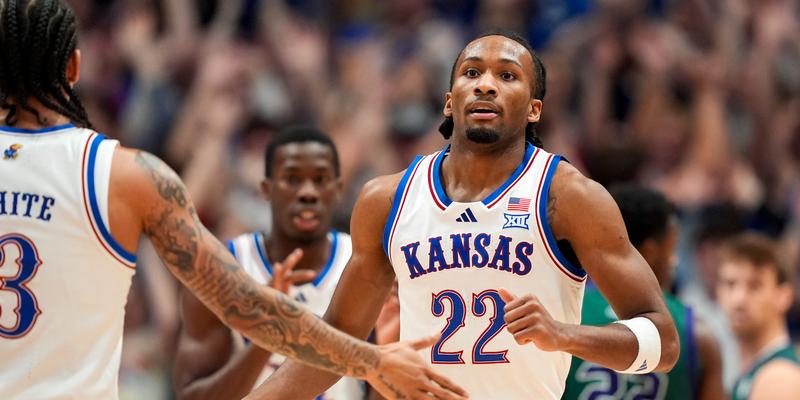
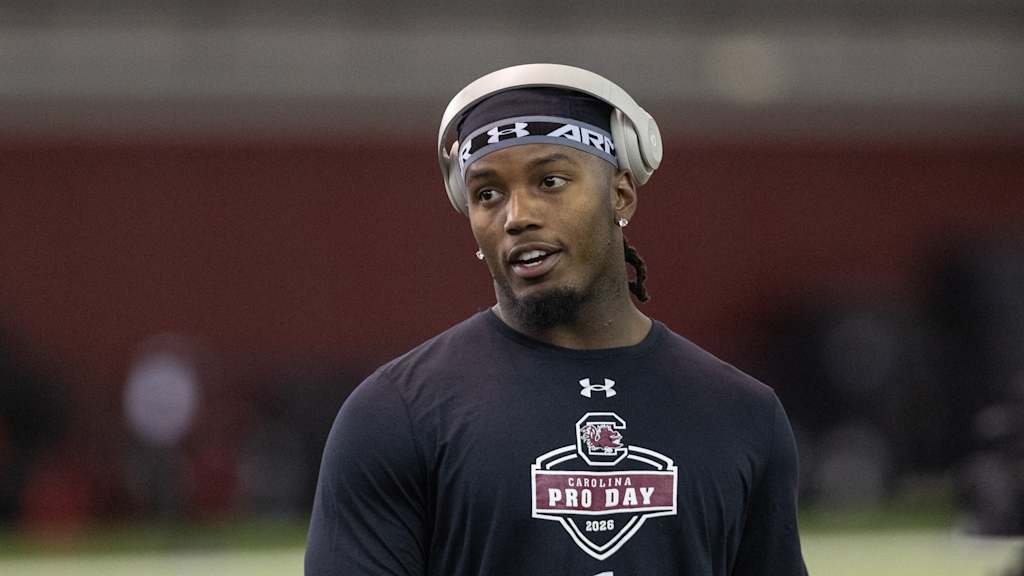
The top of the 2026 running back class was settled weeks ago. Jeremiyah Love is the alpha, a consensus top-five overall prospect whose pro day only reinforced what scouts already knew. But behind him, the class thins out fast — and that thinness is exactly what’s creating urgency around a cluster of Day 2 and Day 3 running back prospects 2026 who weren’t on many radars a month ago. In the past week alone, multiple analyst sleeper lists from PFF, Walter Football, and team-site draft previews have flagged Rahsul Faison, J’Mari Taylor, and Seth McGowan as quietly climbing into late Day 2 and early Day 3 conversations, while Arkansas back Bryce Lance has made perhaps the most dramatic jump of any back in the class — from UDFA consideration to a legitimate Round 3 discussion inside the past 30 days. Front offices chasing value behind a top-heavy RB class are starting to stack these four names near the top of their late-round boards, and the competition between them is more layered than it looks.
![[IMAGE URL]](data:image/svg+xml,%3Csvg%20xmlns='http://www.w3.org/2000/svg'%20viewBox='0%200%200%200'%3E%3C/svg%3E "2026 NFL Draft Running Back Sleepers Quietly Rising on Draft Boards 1")
The Key Players in This Group
- Rahsul Faison – explosive Day 2 riser with elite contact balance
- J’Mari Taylor – speed-first threat climbing into Round 3 range
- Seth McGowan – physical, versatile back with pass-game upside
- Bryce Lance – Arkansas back who jumped from UDFA to Round 3 buzz
Why These 2026 NFL Draft Running Back Sleepers Are Suddenly in Play
The conversation around 2026 NFL Draft running back sleepers doesn’t start with any of these four names — it starts with Love, and more specifically, with what Love’s dominance does to the rest of the board. When a class has a clear Tier 1 prospect locked in and a thin Tier 2 behind him, teams picking in Rounds 2 through 4 face a real structural problem: if they miss on the top-tier back early, there’s no obvious fallback option. That scarcity is what elevates groups like this one. Faison, Taylor, McGowan, and Lance aren’t being evaluated in a vacuum. They’re being evaluated as answers to a very specific draft-room question: who do you target when Love is off the board and you still need a back who can start?
That question has sharpened considerably over the past week as pro day season wraps up and teams finalize their positional boards. The athleticism testing is done. The production is baked in. What’s left is the stacking exercise — and right now, evaluators are finding this group more compelling than the consensus rankings suggest.
Defining the Tiers Within the Group
Not all four backs occupy the same space, and that’s where the analysis gets interesting. Faison and Lance sit at the top of this cluster, with both generating enough late buzz to push into legitimate Day 2 running back prospects 2026 consideration. Faison’s appeal is traits-first — evaluators who’ve watched his tape closely keep coming back to his contact balance and his ability to create after the catch out of the backfield, which gives him immediate value in a pass-heavy offense. Lance’s ascent is different. His jump from UDFA projection to Round 3 candidate is the kind of stock movement that usually traces back to one thing: pro day performance. When a back goes from undrafted to a third-round conversation in a single month, something specific changed. For Lance, the combination of size-speed ratio and zone-fit versatility appears to be driving that re-evaluation.
Taylor and McGowan sit just below, but neither is a clear-cut Day 3 afterthought. Taylor’s speed profile makes him the most dangerous late-round flier in the group — the kind of back who grades out lower on production-based models but lights up athletic testing in a way that keeps teams from walking away. McGowan is the opposite archetype: production-grounded, physical, and comfortable in pass protection in a way that neither Faison nor Lance have fully demonstrated at this stage. In a draft where teams are increasingly building committees, McGowan’s floor makes him appealing to franchises that need a reliable third-down option over a home-run threat.
Where Evaluations Diverge
This is where the group gets genuinely complicated, and where front offices are actually split. The core tension across Faison, Taylor, McGowan, and Lance comes down to a question that has no clean answer: do you take the traits bet or the production floor? Faison and Taylor represent the ceiling side of that ledger. Both carry athleticism that translates on paper, but neither has the kind of sustained college production that removes doubt. Lance, despite his rapid stock climb, is still a relative unknown in terms of scheme fit — his Round 3 buzz is real, but so is the uncertainty about whether his game translates to early NFL contributions or requires a developmental runway.
McGowan sits on the other side of that divide. His pass-protection polish gives him a legitimate path to early playing time in a way the others don’t, but teams debating between McGowan and Lance, for example, are essentially choosing between immediate utility and long-term upside. Neither answer is wrong. That’s exactly what makes this group difficult to stack, and exactly why different teams are landing in different places on their final boards.
The other fault line runs between Faison and Taylor specifically. Both are speed-and-explosion archetypes, but they fit different offensive structures. The Rahsul Faison NFL Draft profile grades better in gap-heavy systems where his contact balance becomes a weekly asset. Taylor’s speed profile plays more naturally in wide-zone concepts where he can threaten the edge on stretch runs and wheel routes. Teams running different systems will value them in opposite order, which means the draft-day outcome for both backs may have as much to do with which team is picking as it does with the backs themselves.
What Teams Are Actually Deciding
In the Round 4-5 range, where most of this group is expected to land, the decision framework shifts. Teams aren’t just asking who the best back is — they’re asking who fits the specific role they need to fill. Franchises already carrying a proven RB1 will prioritize the developmental upside of Lance or the speed-first profile of Taylor, betting on long-term committee value over Day 1 production. Teams with a more urgent need at the position — those who are banking on their Day 3 back to contribute immediately in a rotational role — will gravitate toward McGowan’s floor or Faison’s ability to make things happen after contact.
Lance’s trajectory complicates this calculation in a real way. If his Round 3 buzz is genuine and a team selects him late on Day 2, his developmental ceiling becomes the story. But if he slides to Round 4, the pressure to contribute earlier increases, and the questions about scheme fit become more urgent. The same player, valued differently depending entirely on where he lands.
Projection and Volatility
Faison and Lance project as the most likely members of this group to hear their names called before Day 3 opens. Both have the momentum and the late-cycle buzz to push into the Round 3 conversation, though neither is a lock to stay there on draft weekend. Taylor and McGowan sit in a range where Round 4 feels like the realistic floor and Round 3 feels like the ceiling, with the outcome depending heavily on how the board falls and whether teams with RB need find their primary targets available above them.
The volatility here is genuine. This is a group where the difference between Round 3 and UDFA is not hypothetical — it has happened before with similar profiles, and it can happen again. Lance’s climb is the most dramatic data point in that direction, but it’s also the most fragile. One team’s conviction can move a back’s draft position by three rounds. The inverse is also true.
What Changes Before Draft Day
The final weeks before the 2026 NFL Draft will test whether this group’s momentum holds. Team visits and top-30 visit allocations will signal which franchises are serious about these backs and which are simply doing their homework. If Faison or Lance picks up a confirmed top-30 visit from a team with a clear backfield need, that’s a meaningful data point. If McGowan’s pass-protection grades draw late interest from a team with a strong offensive line, his floor argument gets louder. Taylor’s situation is perhaps the most dependent on top-30 activity — speed-first backs without premium production need a team to fall in love with the testing profile, and those conversations tend to happen in private before they surface in public.
Behind a top-heavy class anchored by Love, the backend running back market is more competitive and more unpredictable than the initial rankings suggested. Among the best value RBs 2026 NFL Draft prospects, Faison, Taylor, McGowan, and Lance are the four names worth tracking closely as draft week approaches — not because any of them is a sure thing, but because in a thin class, sure things are exactly what teams are desperate to find. Stay Tuned to our 2026 NFL Draft Hub