
2027 NFL Draft Tight End Rankings: Six Names Who Could Headline the Class
The 2027 NFL Draft tight end rankings start with an uncomfortable truth. According to the Fantasy Footballers dynasty report, first-round tight ends turn into a TE1 fantasy season 90% of the time. Day-two tight ends hit that mark just 28% of the time, a figure that already includes Travis Kelce and Mark Andrews. Day-three tight ends hit at a 5% rate. That math means the real question for the 2027 NFL Draft tight ends class isn’t who grades out best on tape. It’s who is actually going to hear his name called in round one, because everything downstream of draft slot changes drastically once day two starts.
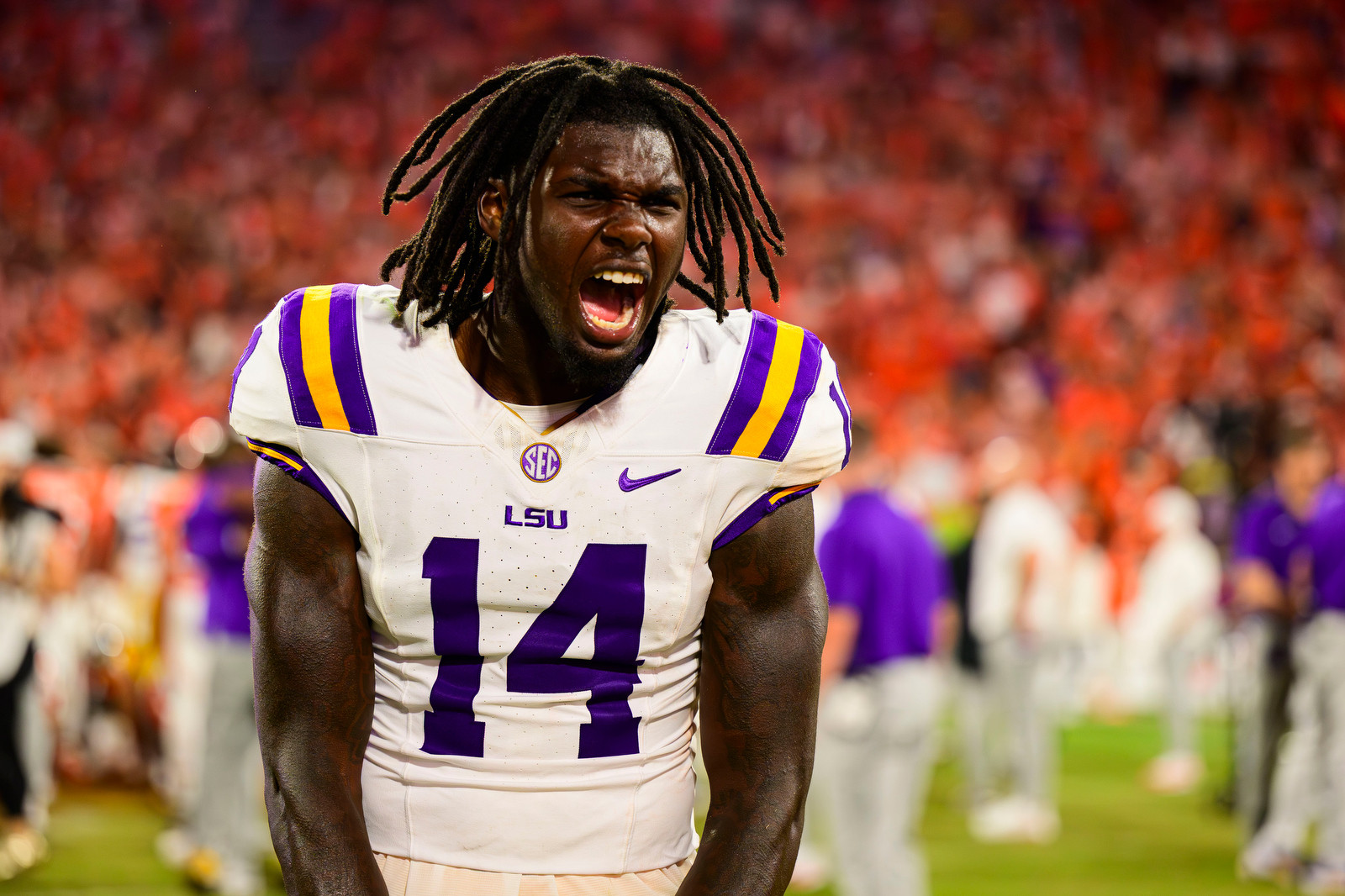
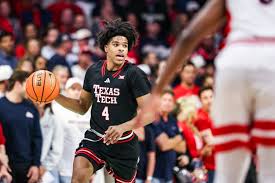
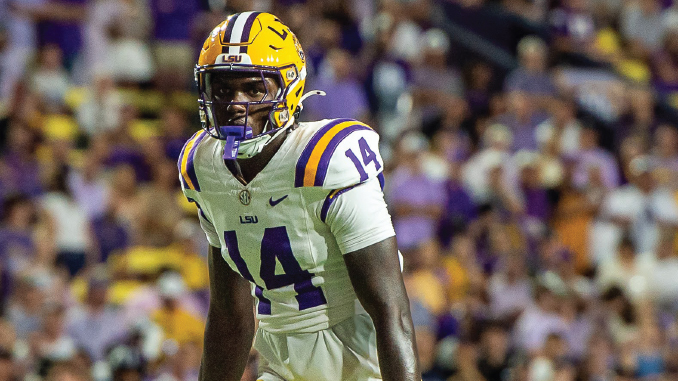
Right now, only two names clear that bar. Jamari Johnson of Oregon and Trey’Dez Green of LSU sit in a tier by themselves, both projecting above the 90th percentile in the Fantasy Footballers rookie model, a tier that has historically produced a 93% TE1 hit rate. Everyone else in this class, DJ Vonnahme of Iowa, Terrance Carter Jr. of Texas Tech, Benjamin Brahmer of Penn State and Peter Clarke of Temple, is fighting for day-two range. The gap in scouting grades between tier one and tier two isn’t that wide. The gap in likely NFL outcomes is enormous, and that tension is the entire story of this class heading into the 2026 season.
How the 2027 NFL Draft Tight End Rankings Break Down
Three of the six tight ends in this year’s early look changed schools or roles this offseason, which is part of why the board is still moving. Carter transferred from Louisiana to Texas Tech. Brahmer followed head coach Matt Campbell from Iowa State to Penn State. Clarke is entering his third season at Temple after starting his career at the NFL Academy in England. Johnson and Green, meanwhile, are staying put and simply need more of the same. The framework behind these 2027 NFL Draft tight end rankings leans on athletic testing and target usage more than most positions, because per the Fantasy Footballers, athletic tight ends get schemed against defensive backs and linebackers at a rate that shows up directly in fantasy production. It also leans on one dominant season mattering more than an early breakout, which is exactly why a strong 2026 could still vault someone out of tier two.
Jamari Johnson and Trey’Dez Green Are Playing a Different Game
Johnson, a 6-5, 257-pound redshirt sophomore at Oregon, posted 1.24 receiving yards per team pass attempt in 2025, which ranks in the 68th percentile, along with a 122.9 QB rating when targeted, 9.1 yards after the catch per reception, 2.45 yards per route run and a target on 19% of his routes. He shared the Oregon receiving room with Kenyon Sadiq, who was selected in this year’s draft, and out-produced him in yards after the catch per reception and yards per route run while posting a comparable QB rating when targeted and a nearly identical target rate. The Fantasy Footballers argue Johnson is arguably the better prospect of the two and belongs in first-round conversation for 2027, with TE1-of-the-class upside if his final Oregon season matches his efficiency marks from 2025.
Green presents a different profile entirely. At 6-7, 237 pounds, the LSU tight end wins on length and size rather than after-catch burst, and the production backs it up. He averaged a 54% receiving touchdown market share at LSU last season and accounted for over 20% of the Tigers’ receiving touchdowns as a true freshman on limited opportunities. His 1.63 receiving yards per team pass attempt at LSU ranks in the 94th percentile, one of the most productive sophomore seasons in the entire class. Where Johnson separates through efficiency and yards after the catch, Green separates through touchdown gravity and size mismatches, and the Fantasy Footballers expect his role at LSU to expand again in year three. Both are round-one bets. Neither needs to change anything about his game, just needs volume and health to hold.
The Day-Two Cluster Is Closer Than the Tiers Suggest
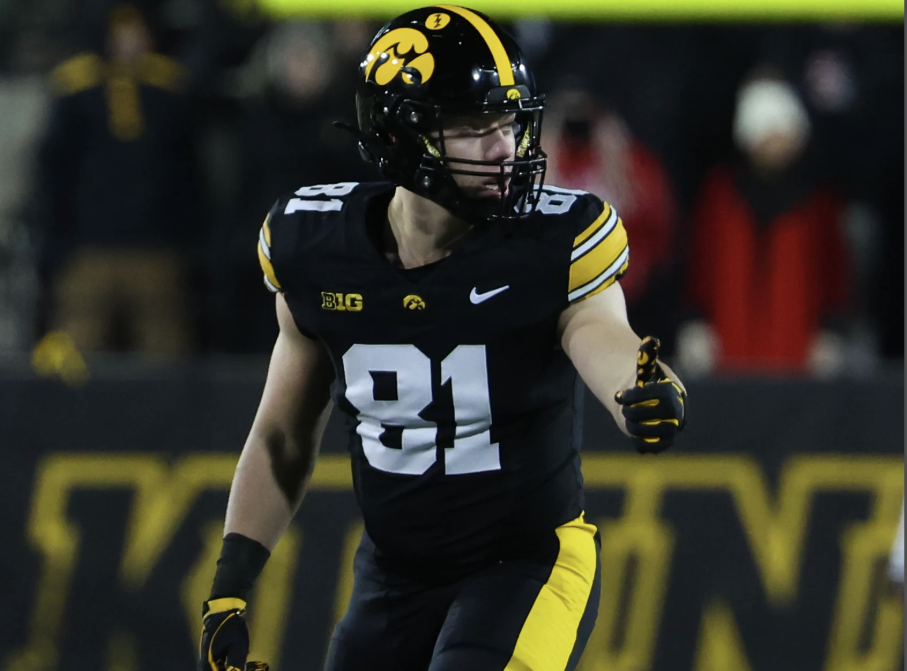
Behind Johnson and Green sits a four-man group separated by tighter margins than the tier labels imply. Vonnahme broke out at Iowa in 2025 with 29 receptions for 434 receiving yards after a quiet true freshman season, and the raw numbers understate him inside Iowa’s offense. His 1.85 receiving yards per team pass attempt ranks in the 95th percentile since 2013, he accounted for over 25% of Iowa’s receiving offense, and he posted a 139.6 QB rating when targeted and 3.1 yards per route run, both above the 90th percentile in this class. Blocking is still the weak link in his profile, but the receiving numbers are as strong as anyone’s outside the top tier, and Iowa has a track record of producing fantasy-relevant tight ends.
Carter is the most efficient tight end in the group when you stack his full body of work. At Louisiana in 2024 he posted a 20.9% weighted dominator rating and 1.95 receiving yards per team pass attempt, good for the 92nd percentile and one of the most productive seasons anyone in this class has put together. Production dipped slightly after his move to Texas Tech, but he still cleared 2.0 yards per route run for a third straight season in 2025 and led every tight end in the country with 23 missed tackles forced. The knock is age. Carter enters a fifth collegiate season, older than most of this group, but the Fantasy Footballers counter that concern by pointing to Kelce, Dallas Goedert and Tyler Warren, older tight end prospects who flashed the same kind of receiving upside in college. If he repeats his 2025 form, Carter projects as a locked-in day-two pick with a shot at 80th-percentile-plus grades.
Brahmer’s move from Iowa State to Penn State is the most consequential change in the entire group. His role expanded steadily across three seasons under Matt Campbell at Iowa State, and in 12 games in 2025 he accounted for over 20% of the Iowa State offense while averaging 1.29 receiving yards per team pass attempt, good for the 71st percentile. Efficiency is where he lags. His 90.6 QB rating when targeted and 1.49 yards per route run at Iowa State both rank near the bottom of the 2027 class. He now steps into the lead tight end role at Penn State, and career-high production there would be enough to push him into borderline day-two range, but he has the furthest efficiency gap to close of anyone in this tier.
Clarke is the value bet of the six. After limited work in his first two seasons at Temple, he broke out across the board in 2025: 1.50 receiving yards per team pass attempt (81st percentile), a 139.2 QB rating when targeted (95th percentile), 2.3 yards per route run (87th percentile) and 16.1 yards per reception (85th percentile) in 11 games. He was the only tight end in the country to finish top 10 in both PFF receiving grade and PFF blocking grade last season, a two-way profile nobody else in this class matches. The catch is schedule strength. Temple’s slate discounts that production in the Fantasy Footballers model, which places Clarke around the mid-70th percentile with day-two upside rather than higher, making him one of the more interesting 2027 NFL Draft tight end sleepers if the surrounding talent at Temple improves.
The Real Debate: Is Jamari Johnson Actually the Best Tight End in the Class?
The central disagreement in this class isn’t between tiers, it’s at the very top. Green has the touchdown production, the size and the LSU platform, and public 2027 draft boards outside the Fantasy Footballers model have already tagged him as the position’s presumptive TE1. Johnson has the efficiency case: better yards after the catch per reception, better yards per route run, and a direct statistical edge over Sadiq, a tight end who just got drafted out of the same Oregon offense. The Fantasy Footballers explicitly argue Johnson is arguably the better prospect of the two, which cuts against the public consensus. Neither argument is close to settled, and it likely won’t be until both players log a full 2026 season. What is settled, according to the source’s model, is that both belong in the same tier, well clear of everyone else in the class.
Where the Depth Thins Out
Beyond the top two, this class is a study in trade-offs rather than a clean pecking order. Vonnahme has the cleanest receiving efficiency profile of the day-two group but needs to answer blocking questions. Carter has the longest track record of sustained production across two schools but carries the age flag into his fifth season. Brahmer has the most obvious opportunity, stepping into a lead role in a new offense, but the widest efficiency gap to close. Clarke has the best two-way grade of anyone outside the top tier, but the softest schedule discount attached to it. None of the four separates from the pack the way Johnson and Green separate from them, which is exactly why draft capital, not tape, is going to decide who actually delivers on their projection.
What NFL Teams Will Be Betting On
For teams picking early, Johnson and Green offer the rare tight end profile where the athletic testing and college production point in the same direction, which per the Fantasy Footballers evaluation framework is the strongest predictor of NFL tight end scoring. A team that lands either one in round one is buying into that 90% TE1 conversion rate for first-round tight ends. Teams picking on day two are making a different bet entirely, one with historical odds closer to a coin flip weighted against them. Vonnahme fits offenses that want big passing-down mismatches over blocking. Carter fits teams comfortable trading a year of rookie-contract control for a more finished route runner. Brahmer and Clarke are bets on situation and continued growth as much as they are bets on what’s already on tape.
Who Actually Moves Up Before the 2027 NFL Draft
One more full college season stands between this group and the 2027 NFL Draft, and per the Fantasy Footballers framework, a dominant final year matters more than how a player’s career started. That favors Green, whose role at LSU is expected to expand again, and it favors Johnson, who only needs to hold his 2025 efficiency across a full season at Oregon. It’s the day-two tier where the real movement is possible. A big year from Carter at Texas Tech, a smooth transition for Brahmer into Penn State’s lead role, or a repeat breakout from Clarke against a tougher Temple schedule could each push one of those names into the same 90th-percentile range Johnson and Green already occupy. Vonnahme has arguably the shortest path, given how strong his efficiency marks at Iowa already look next to the rest of this tier.
The Bottom Line on the 2027 Tight End Class
Strip away the tiers and the 2027 NFL Draft tight end rankings come down to one dividing line: draft capital. Johnson and Green look like round-one tight ends today, and history says that alone makes them roughly three times more likely to become fantasy-relevant starters than any day-two tight end in this class, Kelce and Andrews included in that day-two math. Vonnahme, Carter, Brahmer and Clarke are all talented enough to close that gap, but on the numbers in front of us right now, the smart approach is treating tier one as the safer bet and tier two as the group to watch most closely once the 2026 season kicks off.