
Tarris Reed Is the Second-Round Sleeper Nobody Is Talking About
The Tarris Reed NBA Draft conversation changed the moment he stepped into a private workout session last month. What front offices saw wasn’t the plodding big man some scouting reports suggested. Instead, Reed flashed elite rim-running ability, legitimate lob threat potential, and improving touch around the basket that has teams reconsidering where he belongs in the 2026 draft order.
Reed officially declared for the 2026 NBA Draft after a tournament run that turned heads across the league. Most mock drafts have him sliding into the late second round or going undrafted entirely. But the gap between those projections and what evaluators are seeing in workouts has created real tension in draft rooms.
The Physical Tools That Teams Can’t Ignore
At 6-10 with a 7-4 wingspan and 265 pounds of functional strength, Reed brings the kind of size that doesn’t walk through the door every draft cycle. His physical profile alone puts him in conversations, but it’s the athleticism scouts are discovering in controlled settings that has them rethinking his ceiling.
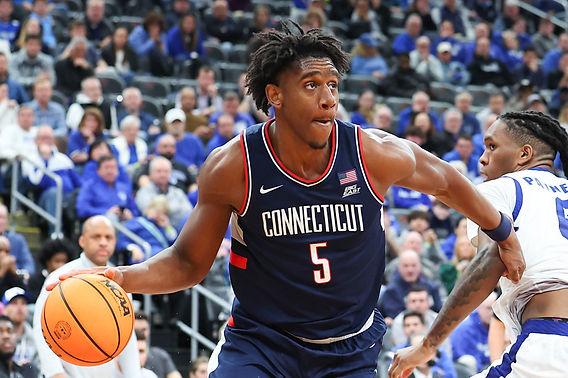
The UConn center averaged 14.3 points, 8.8 rebounds, and 2.4 assists this season while shooting 62.1% from the field. Those numbers hint at efficiency, but they don’t capture the verticality and explosion he showed in workout settings. Teams are split on whether Reed is an old-school, below-the-rim backup center or something more dynamic.
“Physically dominant interior player,” wrote analyst Cyro Asseo, comparing Reed’s style to Andre Drummond. “He thrives through physicality, rebounding, and paint protection.” That’s the floor. The ceiling is what has NBA teams very interested heading into draft night.
Tournament Performance Changed the Tarris Reed NBA Draft Calculus
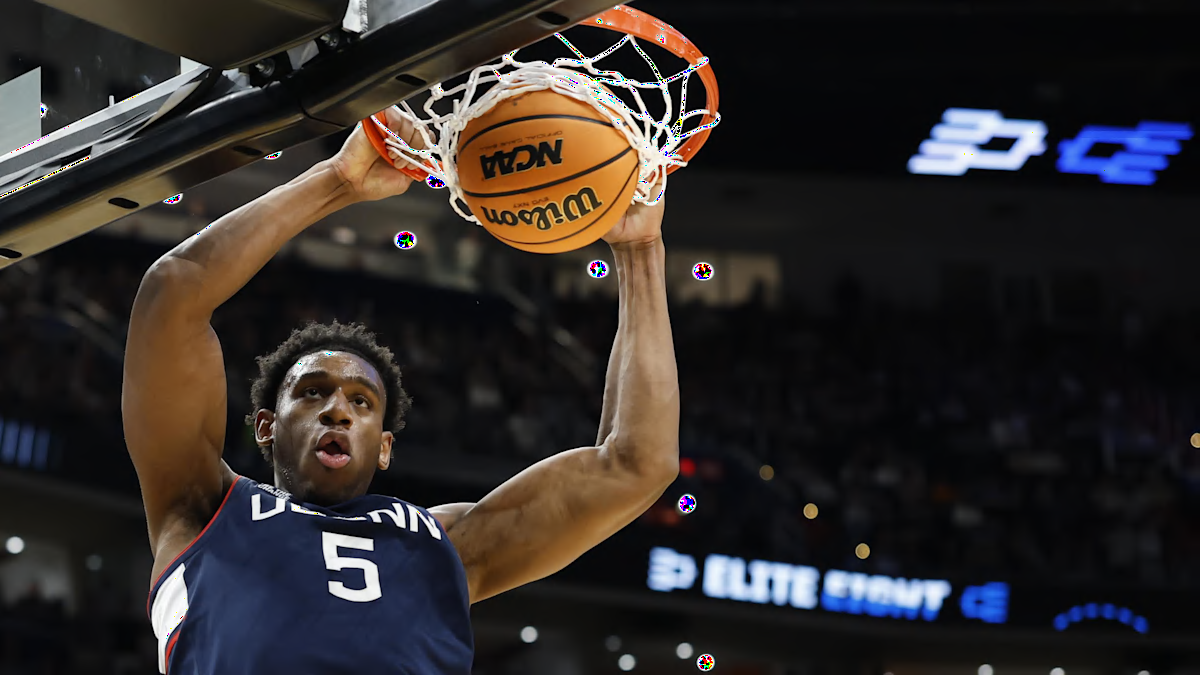
Reed’s draft stock was rising well before the workouts began. His NCAA Tournament showing forced evaluators to pay attention. Over four tournament games, he averaged 21.8 points, 13.5 rebounds, 3.0 assists, and 2.3 blocks while shooting 60% from the floor. Against one Final Four opponent, he posted 26 points, 9 rebounds, and 4 blocks in a performance that showcased his motor and finishing ability.
The most historic line came in the first round against Furman: 31 points and 27 rebounds on 12-of-15 shooting. It was the first 30-point, 20-rebound game on 80% shooting or better since Bill Walton in 1972. That kind of dominance doesn’t happen by accident.
SI.com called Reed “a potential second-round steal with size, strength, touch, and motor” after the tournament run. CBS Sports echoed the sentiment, noting how significantly he had boosted his draft positioning. But questions remain about whether that production translates against NBA length and speed.
Where Evaluations Diverge
This is where front offices split. Some see Reed as a high-floor role player who can rebound, set screens, and protect the rim in short bursts. Others worry about a complete lack of perimeter shooting (zero three-point attempts this season), poor free-throw percentage (ranging from 56% to 64% depending on the source), and struggles against quicker opponents.
NBA Scouting Live noted that Reed has “an emerging mid-range jumper but needs to trust outside shots more.” That’s a polite way of saying teams don’t know if he’ll ever space the floor. For a center in the modern game, that creates real role limitations.
Yet the same reports acknowledge his mobility and touch. Reed isn’t just crashing the offensive glass and dunking putbacks. He’s shown genuine passing feel from the post, including a career-high seven assists against Butler. He finishes through contact with either hand. The tools are there for more than a one-dimensional game.
Best Second Round Picks 2026 NBA Draft Could Include Reed
When scouts talk about the best second round picks 2026 NBA Draft might produce, Reed’s name surfaces more often than public mock drafts suggest. One workout observer labeled him “the most underrated sleeper” available, pointing to the gap between his current projection and the interest he’s generating behind closed doors.
The Tarris Reed 2026 NBA Draft projection sits around pick 39 in some databases, with the Houston Rockets frequently mocked as a potential landing spot. But teams picking in the early second round are doing their homework. If Reed continues to show the athleticism and touch he’s flashed in workouts, someone could reach before then.
His experience matters too. Reed has played 134 college basketball games across stops at Michigan and UConn. He was First-Team All-Big East in 2026 and Big East Sixth Man of the Year in 2025. He’s not a raw project. He’s a veteran big who knows how to play winning basketball.
The Tarris Reed UConn Legacy and Draft Fit
UConn’s recent track record with developing pros adds credibility to Reed’s case. The program doesn’t just churn out high-ceiling projects. It produces players who understand defensive rotations, screening angles, and how to play within a system. Those are exactly the qualities that help second-round picks stick on rosters.
Reed’s archetype as a burly, physical interior big might seem outdated until you watch playoff basketball. Teams still need bodies who can bang with Joel Embiid, neutralize Domantas Sabonis on the glass, and provide size in drop coverage. Reed offers all of that immediately.
The question is whether he can do more. Can he switch onto guards for a possession or two? Will the mid-range jumper become reliable enough to keep defenses honest? Does his passing vision translate to making reads in NBA actions? Those answers will determine if he’s a rotation piece or a depth option.
Why Teams Are Taking a Second Look
The workout buzz around Reed isn’t just about athleticism. It’s about teams seeing him in a controlled environment and realizing the tape doesn’t capture everything. His verticality on lob finishes surprised some evaluators. His hands looked softer catching passes in traffic. His conditioning appeared better than expected for a 265-pound center.
NBADraft.net describes him as “a physical, interior-oriented big” who excels as “a rebounder, rim protector, and efficient low-usage scorer.” That’s the safe evaluation. But there are NBA decision-makers who believe his ceiling sits higher than that consensus.
The Tarris Reed sleeper conversation matters because second-round value comes from finding players whose ceilings exceed their floors. Reed’s floor is solid: he’ll rebound, defend the paint in spurts, and finish around the rim. If the athleticism and skill development are real, his ceiling could be a switchable, versatile big who plays meaningful minutes.
Final Evaluation
Reed won’t be a lottery pick. He probably won’t crack the first round. But the distance between where he’s projected and where he could actually contribute in the NBA is larger than most second-round prospects. That’s what makes him one of the NBA Draft sleepers 2026 could produce.
Teams drafting in the late first or early second round face a choice: chase upside with younger, rawer prospects or take a known commodity with clear strengths and defined weaknesses. Reed fits the latter category, but with more upside than his draft position suggests.
The private workouts revealed what game tape obscured. Reed isn’t just strong and physical. He’s more athletic than expected, more skilled than his stats indicate, and more prepared than most college seniors entering the draft. Someone is going to get excellent value when they finally call his name.
For the latest news, rankings, and analysis on every prospect, visit our 2026 NBA Draft hub — updated throughout the season.