

Mansoor Delane NFL Draft Profile: The One Number That Could Decide a Top-10 Pick
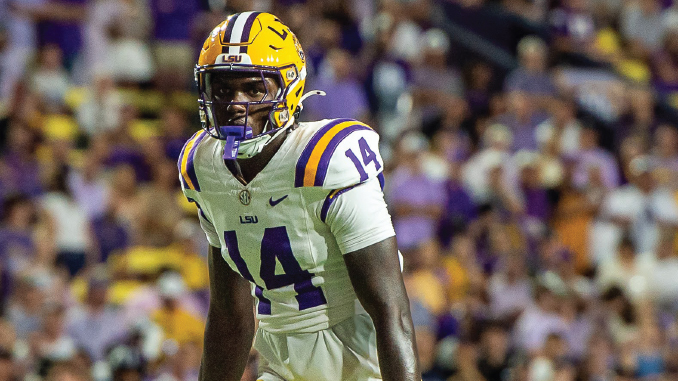
Mansoor Delane is the consensus CB1 in this draft class — and his first-round ceiling may hinge entirely on a single 40-yard dash. The LSU cornerback carries shutdown tape, elite coverage metrics, and a near-flawless 2024 season into the pre-draft process, but legitimate questions around his speed, arm length, and one-year peak are creating real disagreement on where he belongs. For teams like the New Orleans Saints sitting at pick eight, the Delane decision is shaping up as one of the most consequential positional bets of the entire draft.
The Tape Is Undeniable — But One Season of Shutdown Play Isn’t a Career
Delane’s 2024 film at LSU is genuinely difficult to argue against. He posted a passer rating allowed of just 31, surrendered zero touchdowns, drew zero penalties, and forced more incompletions than first downs allowed. The evaluation framed it as “almost flawless” — a year of genuine shutdown cornerback play that puts him at the top of the position in this class.
The problem is what came before it. Delane transferred from Virginia Tech, and while his final season was elite, the years leading up to it were, at best, just good. That one-year peak versus multi-year consistency question is the quiet concern that creates the most tension in his evaluation. The comparison to Devon Witherspoon is instructive here — Witherspoon also had multiple average years before exploding in his final season to become the best corner in the nation. But Witherspoon brought longer arms, more physicality, and a harder hitting style. Delane is smoother, more patient, and technically refined. Whether teams trust a single-year breakout at this price point is exactly where boards start to break.
Why the 40-Yard Dash Could Move Delane a Full Round
Top-10 cornerbacks typically need a 4.4. That’s not arbitrary — it’s the threshold that separates the elite movement profiles from players who might struggle in man coverage against the NFL’s fastest receivers. A 4.5 hurts Delane’s stock. A 4.6 is, as the evaluation put it, “statistically problematic” for a player being considered at this range.
The Kamari Lassiter example frames the stakes clearly. Lassiter ran a high 4.5 or low 4.6, dropped out of the first round, and became a steal in the second. If Delane runs anything close to that range, the same math applies — and a player being discussed at pick eight becomes a much more complicated conversation. The Saints, specifically, are viewed as a realistic landing spot if Delane’s 40 time ticks the right box. If it doesn’t, he may not make it to New Orleans at all in the way currently projected.
Delane’s movement on tape looks smooth — patient mirroring, strong click-and-close, and the kind of stickiness that keeps receivers from separating. But smooth doesn’t always translate to fast, and until the Combine number exists, there’s a real ceiling uncertainty attached to his top-10 projection.
The Measurements Teams Can’t Ignore: Under 30-Inch Arms at Press Corner
Speed isn’t the only threshold creating friction. Delane’s arm length is measuring under 30 inches — under the 10th percentile league-wide. Teams that prioritize press coverage typically want corners in the 31-to-32-inch range, and short arms create legitimate catch-point physicality concerns in contested situations. The evaluation noted a “slight lack of catch point physicality” and a tendency to overplay the deep ball, which becomes more exposed when a receiver can create any separation at the release point.
To be clear, Delane’s tape shows he can play press, bail, and off coverage. He’s versatile, has a strong zone feel, and makes plays on targets thrown to other areas of the field. But versatility doesn’t eliminate the measurement concern — it just shifts the question to whether a team can scheme around arm length rather than demand it. For some front offices, sub-30 inch arms at corner is a hard threshold. For others, production wins the argument. That disagreement is exactly what makes Delane a polarizing first-round prospect despite being the consensus top player at his position.
Where Jarrod McCoy Fits Into the CB1 Conversation
Delane is the clear CB1 by most boards, but the evaluation acknowledged that some teams may prefer Tennessee’s Jamad McCoy, who brings what is described as more explosiveness and speed to the position. McCoy sits around the mid-to-late first-round range, and for teams that prioritize burst and athleticism over Delane’s technical refinement, he’s a real alternative at the top of the cornerback tier.
McCoy doesn’t have Delane’s coverage metrics or the same shutdown reputation, but if Delane’s 40 time lands in the wrong range, the gap between them in terms of draft capital suddenly narrows. Teams that were weighing whether to take Delane at eight may find McCoy later in the round and feel just as comfortable with the athletic upside. That’s the type of swing that reshapes how an entire position group comes off the board.
Mansoor Delane is the most interesting cornerback evaluation in this class precisely because the range of outcomes is so wide. Elite tape, elite production, and a legitimate CB1 argument sit alongside arm length concerns, one-year consistency questions, and an unknown 40 time that could shift his stock by fifteen picks. The Combine will do more to settle the Delane debate than anything else this pre-draft cycle. Until then, he remains the most compelling and most contested corner in the draft.
For more NFL Draft analysis and content, stay tuned to Prospect-Radar.com.