
The 2026 NBA Draft stock risers emerging from March Madness have already flipped what looked like a settled conversation at the top of the board. Three weeks into the tournament window, scouts aren’t just confirming what they already knew — they’re discovering new answers, raising new questions, and watching the draft order shift in real time.
What follows is a player-by-player breakdown of the prospects who have moved the needle most, and why their trajectories matter right now.
—
1. AJ Dybantsa — BYU Wing | No. 1 Overall Candidate
Why Now: BYU’s tournament exit stung. But AJ Dybantsa leaving March Madness with higher stock than he entered with tells you everything about what scouts actually saw.
The 6-foot-9 freshman wing scored 35 points in a first-round loss to Texas — a defeat that ended his college season but launched a new phase of his draft narrative. Across three conference tournament games, Dybantsa averaged 31.0 points per game, capping a season in which he finished as the nation’s leading freshman scorer at 25.3 points per game on 60.2 percent true shooting.
Those aren’t just impressive numbers — they’re translatable ones.
Skill Evaluation: Dybantsa’s true shooting percentage reflects a scoring profile that already looks NBA-ready: he can score off the catch, off the bounce, and through contact at the rim without forcing inefficient volume. His 6-foot-9 frame with guard-level fluidity gives him the positional versatility modern NBA teams covet at the wing. He processes the game at a speed that suggests his college competition wasn’t close to his ceiling.
The Question: Tournament exposure was limited by the early exit. Scouts won’t get another live look under high-stakes conditions before the draft. The sample is strong — but it’s abbreviated.
Draft Outlook: Multiple updated mock drafts, including CBS Sports’ most recent projections, now have Dybantsa ahead of Darryn Peterson for the No. 1 overall selection. The conversation has moved from “who goes first?” to “who’s challenging Dybantsa?” That framing shift is significant. He profiles as a franchise wing with legitimate star upside — the kind of player built to carry an offensive system from day one at the next level.
Archetype: Dybantsa’s scoring profile carries echoes of a young Paul George — a long, creation-capable wing who can function as a primary option or complement elite talent depending on the roster around him.
—
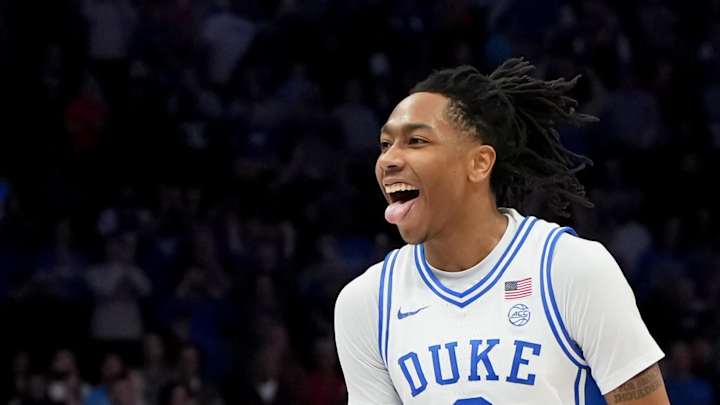
2. Cameron Boozer — Duke Big | Lottery Lock, Naismith Contender
Why Now: While the No. 1 debate generates noise, Cameron Boozer has been the draft’s most consistent performer all season — and his tournament run is still alive.
The Duke freshman has averaged 22.5 points and 10.5 rebounds per game, leading the Blue Devils to the No. 1 overall seed and placing himself on track to become just the fifth freshman in history to win the Naismith Player of the Year award. His KenPom rating is the highest ever recorded for a first-year player — a statistical context that NBA front offices will not overlook.
Skill Evaluation: Boozer’s production checks every box evaluators want from a high-usage big: elite rebounding rate, interior scoring efficiency, and consistent output against top competition. He doesn’t create the same uncertainty that follows high-ceiling/lower-floor prospects — what you see is what scouts believe they’re getting. That reliability is rare at his age and position.
The Question: Can Boozer’s game extend in ways that give him playmaking and perimeter creation at the next level, or does his ceiling cap out as an elite traditional big in an increasingly positionless league?
Draft Outlook: Boozer is a virtual lock for the top three regardless of how Duke’s tournament run concludes. But if the Blue Devils push deep — Final Four or beyond — the No. 1 conversation reopens in a way it hasn’t been in months. Among NBA Draft 2026 prospects, he remains the surest bet in the class: elite measurables, elite production, elite competition level.
—
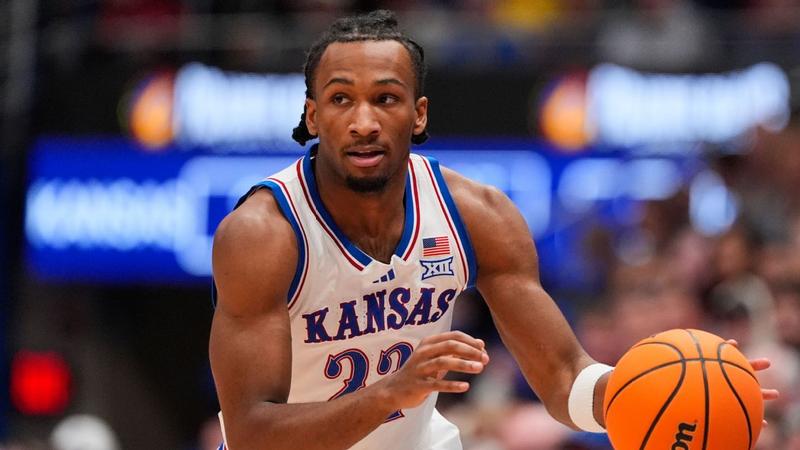
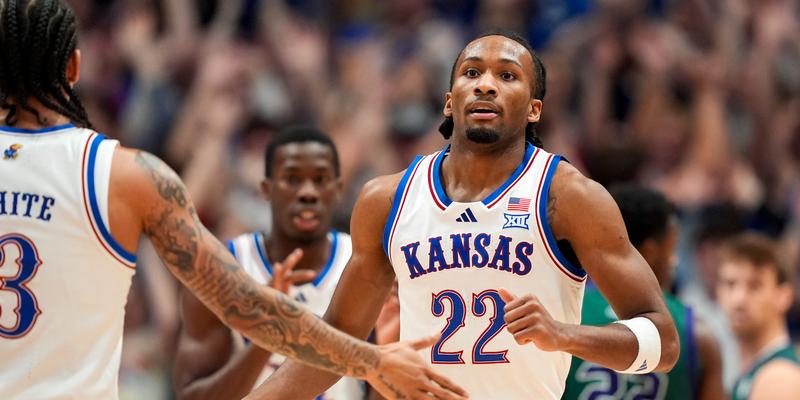
3. Darryn Peterson — Kansas Guard | Top-Two Prospect, Stock Under Scrutiny
Why Now: Peterson entered the tournament as the presumptive No. 1 pick. He left it with scouts asking questions they hadn’t been asking before.
The 19-year-old Kansas guard is physically built for the NBA — long, quick off the bounce, and capable of creating separation in isolation and off pick-and-roll. His Round of 64 performance against Cal Baptist (28 points, sharp shot-making, composed decision-making) validated the pre-tournament scouting consensus. Then came St. John’s.
Skill Evaluation: Peterson’s season numbers — 20.2 points, 4.2 rebounds, 1.6 assists per game, All-Big 12 Second Team — reflect a legitimate offensive engine with the physical profile to translate. His shot-creation ability and length on the defensive end remain genuine strengths.
The Question: A 5-of-15 shooting performance and three key turnovers in a 67-65 loss to St. John’s raised a specific concern: can Peterson impose his will in high-leverage moments the way elite point guards must? ESPN analyst Seth Greenberg publicly questioned whether Peterson would “take over” games at the next level — the kind of on-record skepticism that filters directly into team rooms.
Draft Outlook: Peterson remains a near-certain top-two pick. The floor is still high. But the dominant tournament moment he needed to remove all doubt never came, and the gap between him and Dybantsa at No. 1 has measurably widened. Scouts aren’t dropping Peterson — they’re just asking harder questions about his ceiling.
—
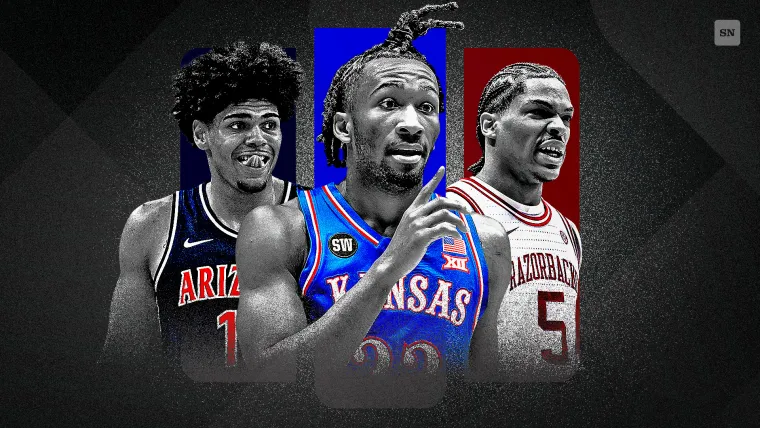
4. Darius Acuff Jr. — Arkansas Guard | Breakout Performer, Lottery Stock Rising
Why Now: If any player has used March Madness as a personal launching pad, it’s Darius Acuff Jr. — and the timing of his surge could not be better for his draft trajectory.
The 6-foot-3 sophomore guard was already drawing fringe lottery buzz before the tournament opened. Then he carried Arkansas to an SEC Tournament championship and carried that form directly into the NCAAs, averaging 30.0 points and 6.5 assists per game across the Razorbacks’ first two tournament games.
That kind of sustained scoring — in the most-watched amateur competition window of the year — is exactly the exposure that accelerates draft stock movement.
Skill Evaluation: Acuff is a hyper-scorer with legitimate playmaking instincts. His 6.5 assists per game during the tournament run aren’t just volume — they reflect a player who can process pressure defense and find teammates when teams are forced to account for his scoring. The combination of scoring volume and quick decision-making in the open floor is a profile NBA teams will pay to develop. NoCeilings NBA described him as “tailor-made for March — hyper-scoring with quick processing,” a read that aligns with what the film is showing.
The Question: Acuff’s three-point consistency and off-ball impact in half-court NBA sets remain evaluation questions. High-volume scorers with limited positional size face real defensive assignment concerns at the next level.
Draft Outlook: Bleacher Nation’s most recent mock draft has Acuff rising sharply into the lottery. Whether his run continues or not, the scouting file is already built. His stock has never been higher — and the Darius Acuff breakout from this tournament run has fundamentally changed his draft ceiling conversation from “late lottery” to “potential top-ten name.” Scouts who weren’t tracking him closely before March are tracking him now.
—
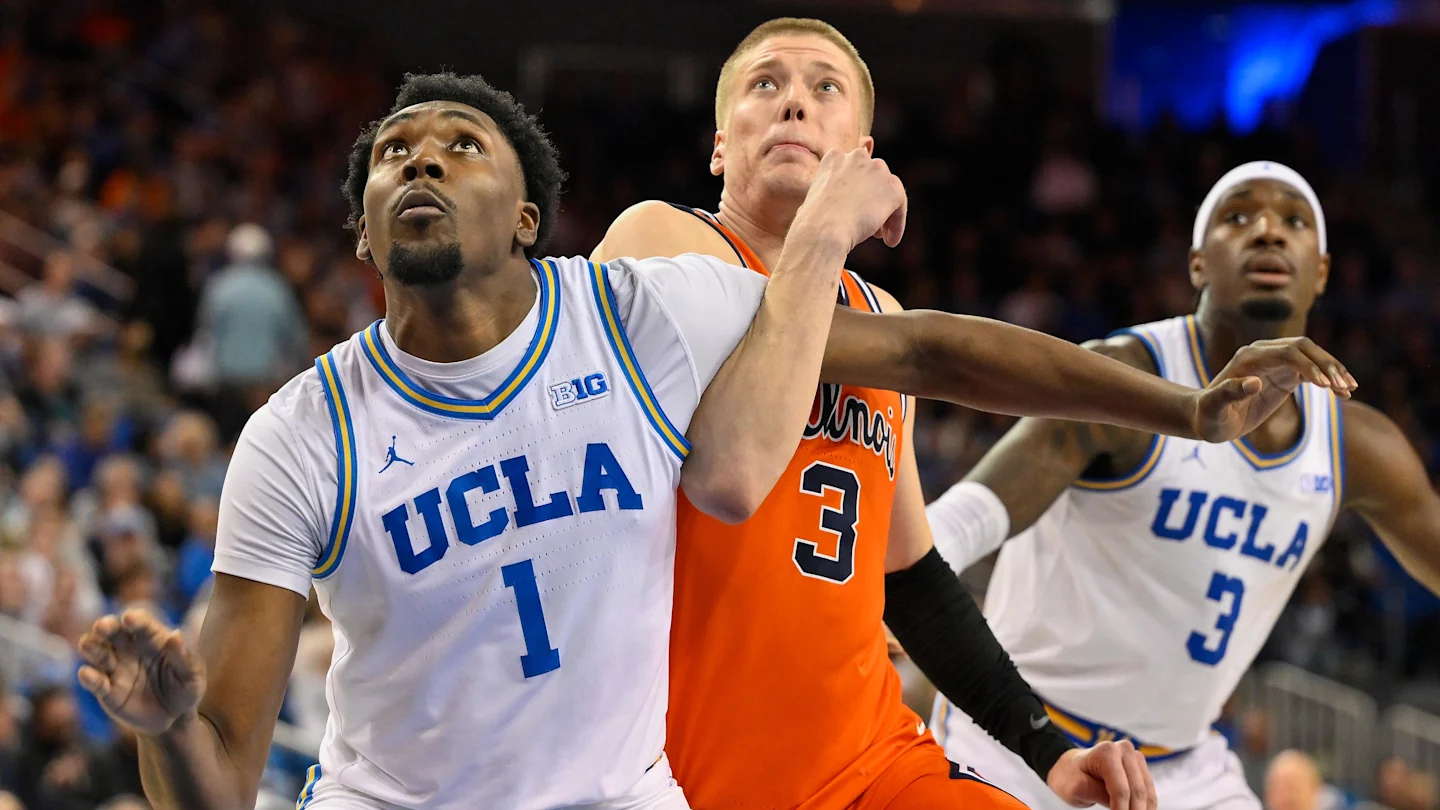
5. Keaton Wagler — Illinois Guard/Forward | Under-the-Radar Riser
Why Now: While the top of the 2026 draft class commands headlines, the class is proving deeper than its pre-tournament reputation — and Keaton Wagler is central to why that narrative is shifting.
The Illinois freshman has averaged 18 points, four rebounds, and four assists per game this season, delivering in a system that demands both shot-making and playmaking versatility. Wagler’s continued ascent with the Illini in the tournament has pushed him further up evaluation boards that previously treated this class as “strong at the top, shaky in the middle.”
Skill Evaluation: Wagler’s ability to function as both a shot creator and facilitator at his size gives him a positional flexibility that translates well to modern NBA spacing concepts. His four assists per game reflect genuine playmaking instincts, not just incidental passing. The scoring efficiency paired with the assist rate is what has scouts paying closer attention.
The Question: Wagler’s performance against elite defensive athletes and his shooting consistency under tournament pressure remain the variables evaluators need to resolve before assigning a firm draft range.
Draft Outlook: Keaton Wagler’s rising draft stock out of Illinois represents exactly the kind of mid-draft discovery that reshapes board depth. He projects as a versatile offensive piece with potential rotation-player floor and legitimate starter upside if the shooting translates. A deep tournament run could push him firmly into first-round conversations.
—
6. Kingston Flemings & Mikel Brown Jr. — Guard Class Depth | Names to Track
Why Now: The 2026 NBA Draft guard class was already headlined by Peterson and Acuff. But Kingston Flemings and Mikel Brown Jr. have quietly added intrigue to a position group that evaluators are now treating with considerably more respect than they were in January.
Both players have given scouts enough tournament material to build cases around, contributing to a growing consensus that the “shaky middle” label attached to this draft class before March was premature. The guard depth in the 2026 class — once viewed as a two-man tier — is becoming a legitimately layered conversation.
Draft Outlook: Flemings and Brown are players worth monitoring as the tournament continues. Neither has the current lottery buzz of Acuff or the pre-established top-five positioning of Peterson, but both project as legitimate first-round value discussions if the late-season momentum holds. NBA scouts are watching this tier closely as potential steals in the 15-to-25 range.
—
The Window Is Still Open — But It’s Closing Fast
March Madness has done exactly what scouts hoped it would: it delivered answers, created new questions, and reshuffled the 2026 NBA Draft order in ways that will still be reverberating when the Draft Lottery arrives on May 10.
Dybantsa is the new No. 1 favorite. Boozer’s steadiness has never looked more valuable. Peterson has work to do. And Acuff has turned a tournament into a draft-stock catapult that nobody outside of Arkansas fans saw coming at this scale.
What this moment reinforces — and what the Wagler, Flemings, and Brown ascensions make especially clear — is that draft boards built in February have a short shelf life. The players profiled here won’t stay under the radar for long. Evaluation windows close, lottery positions lock, and the prospects who performed when the lights were brightest will carry that currency into every front office conversation between now and draft night.
The scouts were right to circle March Madness on the calendar. It delivered. And for the players who seized the moment, the 2026 draft order will reflect exactly what they showed.