
AJ Dybantsa’s March Madness Statement Headlines a 2026 NBA Draft Class Full of Rising Performers
The 2026 NBA Draft prospects making the biggest noise right now aren’t waiting for combine invitations to prove their value — they’re doing it under tournament lights, in hostile arenas, against the best competition college basketball has to offer.
March has a way of separating legitimate prospects from pretenders, and this year’s field has delivered a clear frontrunner while simultaneously surfacing a handful of risers whose draft stock is quietly shifting in real time.
These are the players scouts are circling, debating, and in some cases, completely re-evaluating.
1. AJ Dybantsa — BYU Wing | Consensus No. 1 NBA Draft 2026 Contender
The conversation around AJ Dybantsa’s NBA Draft 2026 stock doesn’t begin and end with the scoreline — it begins with *how* he produced it and ends with the realization that he may have just played his final college game at 19 years old.
In BYU’s first-round NCAA Tournament loss to Texas, Dybantsa (SF/PF, BYU, projected top-1 overall pick) delivered 35 points and 10 rebounds on a night when his supporting cast was functionally invisible — zero bench points, one other player in double figures.
He logged all 40 minutes, went a perfect 12-of-12 from the free-throw line, and did it against a physically imposing Texas frontcourt that had momentum, size, and depth advantages across the board.
The NBA Translation
What scouts are documenting isn’t the raw point total — it’s the *type* of creation behind it.
Dybantsa’s 35-point output came through a combination of downhill drives that generate elite free-throw volume, pull-up mid-range efficiency, and the kind of body control that allows him to absorb contact and still finish.
His 25.3 points per game as the nation’s leading scorer represents three-level offensive capability at 6-foot-9 with legitimate wing length — a profile that NBA front offices spend lottery picks searching for.
The free-throw mastery is particularly telling from a scouting standpoint. A 12-for-12 line in a high-pressure elimination game doesn’t happen by accident.
It reflects composure, shot mechanics under duress, and a free-throw platform that scouts view as a leading indicator of sustainable offensive production at the next level.
The Honest Evaluation
The questions that exist around Dybantsa aren’t about talent — they’re about efficiency ceilings.
An 11-of-25 shooting night from the field (44%) on a high-volume load reflects the reality that he was operating as a one-man offense against a defense designed entirely around stopping him.
Decision-making in shared offensive environments and three-point consistency over a full NBA season remain the developmental areas scouts acknowledge, even as they project his ceiling as a primary offensive option at the highest level.
His playstyle draws natural comparisons to a young Paul George — the size, the shot creation, the ability to operate from the wing in both isolation and transition settings.
The archetype is real, and the age (19) makes the projection even more compelling.
Why Now
Dybantsa has held a top-ranked prospect status since middle school, but the AJ Dybantsa March Madness performance cemented something beyond rankings — it demonstrated elite-level individual production against elite resistance, in a moment when the team framework around him had completely collapsed.
That’s the exact adversity simulation NBA evaluators look for. Texas head coach Sean Miller called him a “generational talent” postgame. ESPN’s Jay Bilas described a skill set “made in a lab for the NBA.”
Those aren’t throwaway quotes from winning coaches — that’s the opponent’s staff confirming what the tape already shows.
He hasn’t declared yet, but his BYU career is almost certainly finished. When it ended, it ended with a 30-point NCAA Tournament debut — the first freshman to do that since Stephen Curry in 2007.
That’s not context for hype. That’s historical placement scouts will reference for years.
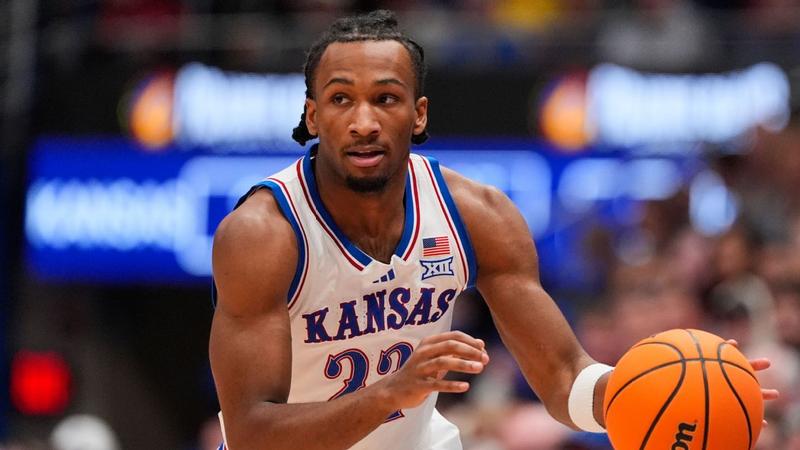
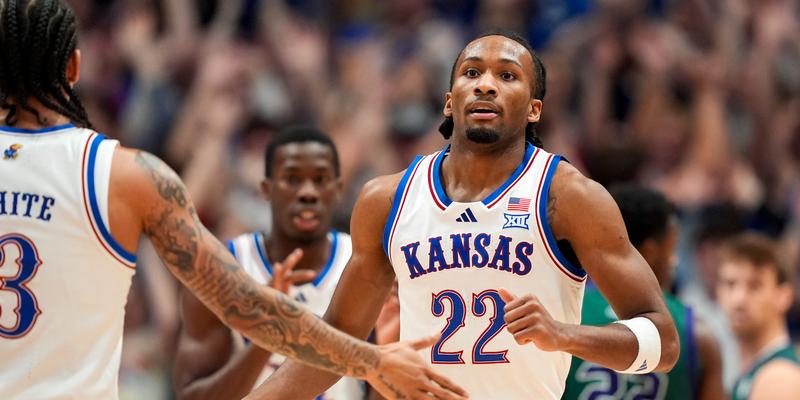
2. Darryn Peterson — Kansas Guard | Top-5 NBA Draft 2026 Riser
While Dybantsa commands the spotlight, Darryn Peterson (SG/SF, Kansas, projected top-5 pick) has been making a quieter but equally compelling case throughout the season — and his draft stock is moving in the right direction at exactly the right time.
Peterson’s profile is built around shooting versatility that translates immediately to NBA spacing concepts. His ability to operate off screens, catch-and-shoot from the corners, and create off the dribble gives him a multi-functional offensive identity that fits multiple roster constructions.
NBA executives have noted his improved shot selection and the consistency of his mechanics under defensive pressure — two markers that separate shooters who project at the next level from those who don’t.
The NBA Translation
Peterson’s shooting versatility isn’t just a highlight-reel trait — it’s an organizational weapon.
Teams that build offenses around ball movement and floor spacing have specific needs for wings who can punish sagging defenses and hit tough pull-ups when the defense adjusts.
Peterson checks both boxes, which is why the AJ Dybantsa vs Darryn Peterson draft stock conversation remains genuinely competitive despite Dybantsa’s current positioning.
The Honest Evaluation
The question scouts are still working through is Peterson’s ability to create against set, NBA-caliber defenses when his shot isn’t falling.
His offensive game is more trigger-dependent than Dybantsa’s — meaning the floor of his production could drop in stretches where his shot mechanics or rhythm aren’t right.
Athleticism and defensive engagement also remain evaluation points for scouts who want to project him as a two-way wing rather than a purely offensive piece.
Why Now
Kansas’s tournament run is providing Peterson with exactly the high-stakes exposure that can accelerate draft board movement.
March Madness breakout performances don’t need to be 35-point explosions — sustained efficiency and winning contributions on a major program’s postseason stage carry significant evaluator weight.
Peterson’s upside at the next level is real, and scouts are watching closely.
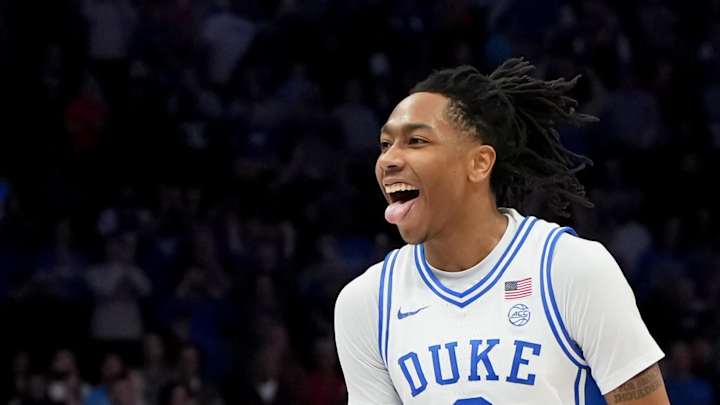
3. Cameron Boozer — Duke Forward | Winning Pedigree Meets NBA Upside
Cameron Boozer (PF/C, Duke, projected top-5 pick) brings a different kind of draft narrative — one built around winning environment, positional versatility, and a bloodline that scouts instinctively respect but also scrutinize carefully.
Boozer’s value proposition centers on high-IQ post play, reliable mid-range scoring, and the kind of pick-and-roll functionality that modern NBA offenses depend on from their big men.
His instincts around the basket — positioning, timing, finishing angles — reflect years of elite development and are notably advanced for his age.
The NBA Translation
What makes Boozer an interesting NBA prospect is his combination of interior efficiency and face-up creation.
He doesn’t project as a pure rim-runner, and he doesn’t project as a stretch-4 in the traditional sense — he fits more naturally as a skilled frontcourt piece who can operate in two-man actions, make reads out of the short roll, and maintain defensive credibility against modern NBA forwards.
The Honest Evaluation
The floor-spacing question is real and likely the central factor in how high Boozer ultimately climbs.
Three-point range — or the absence of it — determines deployment flexibility for NBA front offices in today’s game.
If Boozer can demonstrate even moderate perimeter shooting reliability, his ceiling expands significantly. If not, his role narrows toward a more traditional usage pattern that limits lineup versatility.
Why Now
Duke’s tournament positioning is giving Boozer maximum national exposure at the moment when 2026 NBA Draft prospects are being most closely evaluated.
His winning pedigree under a high-profile coaching staff adds organizational trust signals that lottery teams value — particularly franchises rebuilding around culture and process, not just raw talent.
4. Matas Vokietaitis — Texas Big | International Sleeper Gaining Momentum
Here’s a name that didn’t appear on most prospect radars heading into March — and that’s exactly why it belongs in this conversation.
Matas Vokietaitis (PF/C, Texas, projected second-round to fringe first-round prospect) delivered a 23-point, 16-rebound performance against a BYU team that contained the nation’s leading scorer — and he did it with the kind of physical dominance and motor that NBA developmental teams specifically target in international prospects.
The NBA Translation
Vokietaitis’s rebounding production — 16 boards against a BYU front line that was clearly overmatched — reflects timing instincts and positioning IQ that don’t require offensive creation to translate.
His 23-point output adds intrigue to what initially looked like a glass-and-motor profile. If the scoring is real and sustainable, Vokietaitis’s archetype shifts from backup big to legitimate rotation piece with starting potential.
The Honest Evaluation
The honest question with Vokietaitis is sample size. One tournament performance — even a dominant one — doesn’t establish a draft trajectory.
NBA scouts will want to see consistency across a full body of work, and his offensive skill set will need to hold up against the length and athleticism of professional competition.
But the athletic profile, the rebounding instincts, and the production in a high-pressure game have earned him a serious second look.
Why Now
International prospects who produce on March’s biggest stage tend to see rapid draft stock movement — particularly in a class where teams are hungry for frontcourt depth and size.
The Vokietaitis tape from this game will circulate among international scouting departments immediately. Under-the-radar prospects with legitimate physical tools don’t stay quiet for long once the footage exists.
5. Robert Wright III — BYU Guard | Proving Viability as a Draft Conversation Piece
Robert Wright III (PG/SG, BYU, projected fringe first-round to second-round prospect) operated in the longest shadow in college basketball this season — sharing a roster with the consensus top pick in the 2026 Draft — and still managed to carve out a 14-point individual performance in BYU’s tournament exit.
That context matters more than the number itself.
The NBA Translation
Wright’s ability to function as a secondary creator and scoring option alongside a ball-dominant wing like Dybantsa demonstrates a level of positional and offensive adaptability that NBA teams value in complementary guards.
His shot-making from the mid-range, off-ball movement, and willingness to operate within a defined role rather than forcing usage suggest a player who understands his identity — one of the quieter evaluation markers that separates long-term rotation pieces from perpetual developmental projects.
The Honest Evaluation
The concern with Wright is projection clarity. Being the second-best player on a Dybantsa-led team doesn’t establish a ceiling — it establishes coexistence.
Scouts will want to evaluate him in situations where he’s carrying more offensive responsibility before forming firm opinions on his draft range.
His size and athleticism at the guard position add projection intrigue, but the body of work needs expansion.
Why Now
BYU’s season is over, which removes the primary context that defined Wright’s college career. That’s actually an opportunity — it forces evaluators to look at his individual profile independently rather than through the Dybantsa filter.
For a player whose stock may be artificially suppressed by proximity to a generational talent, that independent evaluation could accelerate his rise.
The Bottom Line: This Window Closes Fast
The 2026 NBA Draft top prospects are being defined in real time, and the players profiled here — from Dybantsa’s statement performance to the quieter risers gaining traction around him — represent exactly the kind of early-identification opportunities that matter most before draft boards calcify.
These players won’t stay under the radar. Scouts are already tracking these performances, dissecting the film, and updating internal rankings.
Draft boards will shift quickly as the tournament continues and pre-draft workouts approach. The AJ Dybantsa scouting report 2026 is effectively complete — the evaluation question has moved from *is he the pick* to *which franchise earns the right to make it*.
But the prospects surrounding him in this class are still being shaped, still being discovered, and still creating opportunities for the evaluators paying closest attention right now.
That window doesn’t stay open long. It never does.